Just a few years ago, microphones, gimbals, backdrops, ring lights, and reflectors were relegated to professionals in the photography and film industries. But with the growing internet access and the post-2020 boom in the creator economy, that has quickly changed.
According to a recent Qoruz report, India’s creator economy has grown by 322%, from 962,000 influencers in 2020 to over 4.06 million in 2024. Recognising this shift, Prime Minister Narendra Modi recently announced the beginning of India’s ‘Orange Economy’, rooted in content, creativity, and culture.
Tapping into this movement, has made it its mission to empower and enable India’s creator economy. From seasoned industry professionals to Instagram creators, it offers professional studio equipment to help produce high-quality content without high costs.
Bringing the backdrop industry home
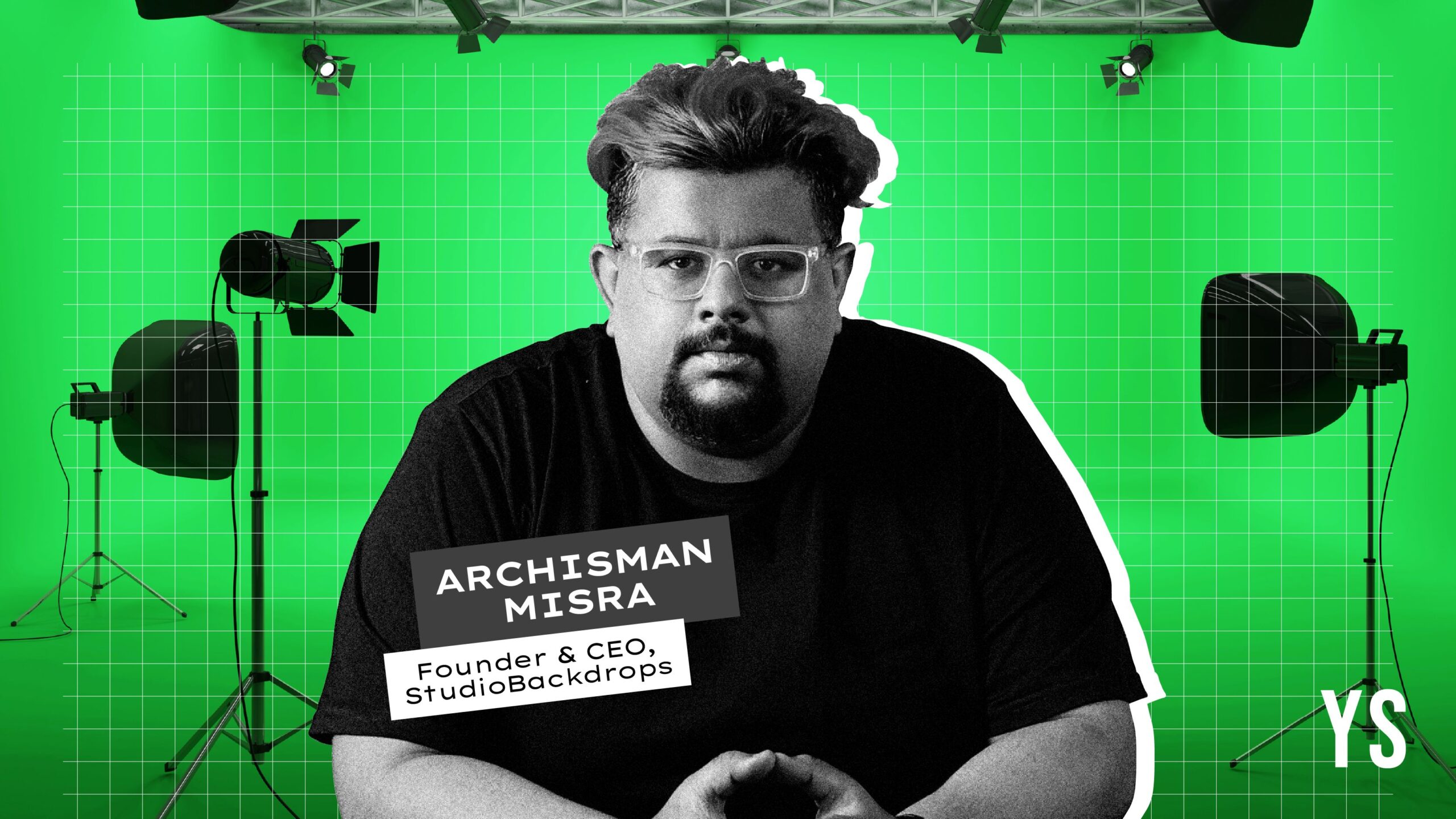
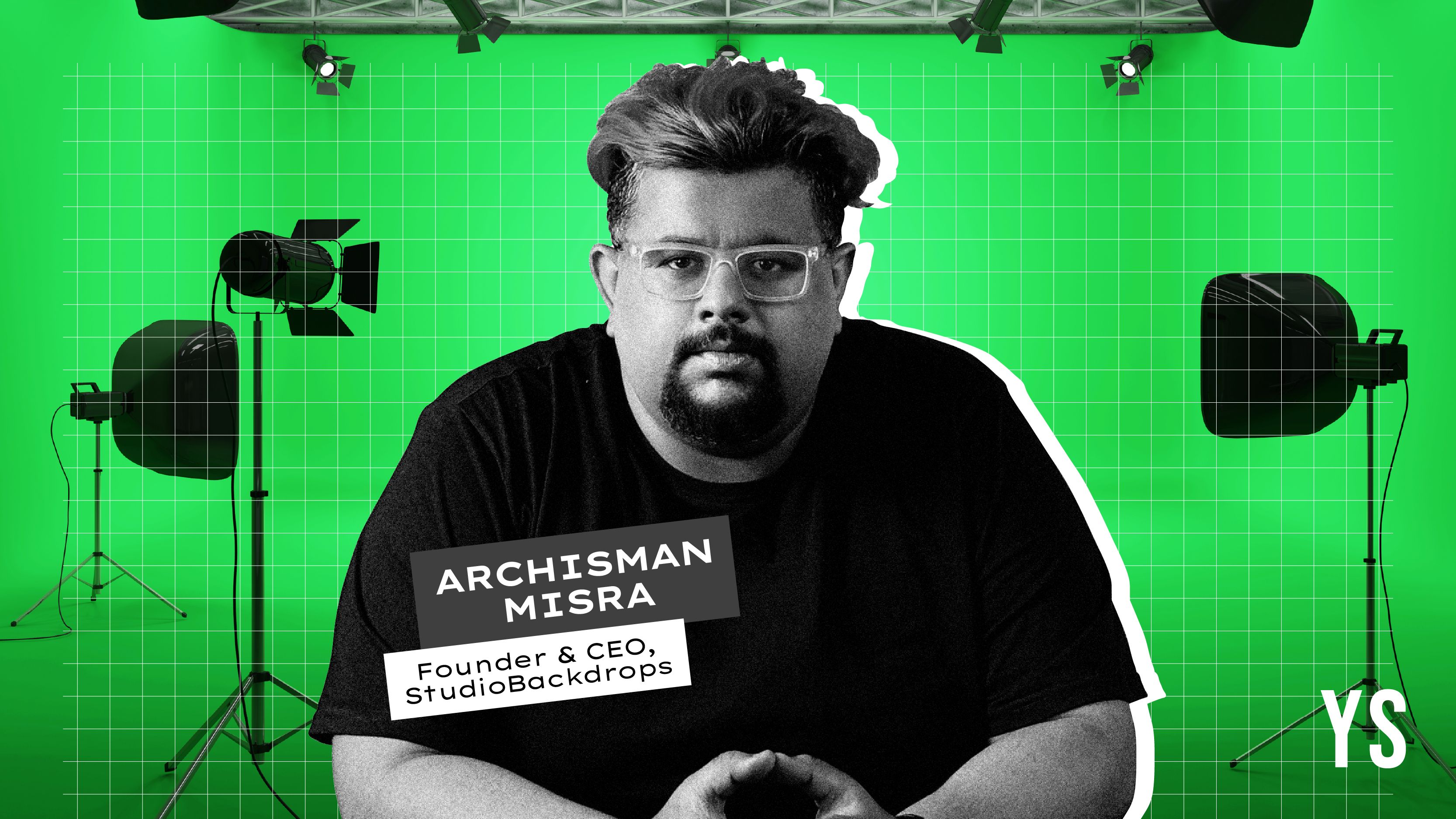
Founded in 2016, the company was established after founder and CEO Archisman Misra, a photographer and creator, faced a lack of good professional equipment at affordable prices in India. While working on campaigns for brands like Lipton, Pepsi, Panasonic Lumix, and Horlicks, he spotted a niche in backdrops, an underexplored market with untapped potential.
India is a key producer of muslin photography backdrops, supplying studios and resellers worldwide. Many are exported and used by international brands under their own labels. “Seeing this, I thought—why not scale this industry in India for India? Instead of staying behind the scenes, I wanted Indian manufacturers at the forefront,” says Misra.
StudioBackdrops soon ventured into other advanced studio essentials, and today, the company offers over 6,500 SKUs ranging from lighting equipment, audio tools, and studio gear to fabric and paper backdrops. Its in-house brands include Baroque Studio and Backdrops4ever, which specialise in traditional-dye fabric backdrops, and Indus, India’s first seamless paper backdrop brand.
Launched in 2023, Indus has captured 70–75% of the Indian seamless backdrop market, competing with global brands like Savage and Superior, from which it also imports products as the original creator of paper backdrops.
It offers a lighting range under its brand, AriesX, developed in partnership with a South Korean manufacturer and built using high-quality components sourced from Samsung SDI.
“Our brand, AriesX, is built on a simple idea: make professional-grade equipment accessible and affordable, and empower beginners with the knowledge to use it confidently,” Misra explains. In this space, AriesX competes with Godox, Profoto, and Elinchrom.
The startup also collaborates with photographers and creators, encouraging them to showcase their work, and produces tutorials to help users build studios and create professional content.
.thumbnailWrapper{
width:6.62rem !important;
}
.alsoReadTitleImage{
min-width: 81px !important;
min-height: 81px !important;
}
.alsoReadMainTitleText{
font-size: 14px !important;
line-height: 20px !important;
}
.alsoReadHeadText{
font-size: 24px !important;
line-height: 20px !important;
}
}

Custom logistics for creative India
StudioBackdrops separates itself from other platforms through its personal touch. Not just through customer engagement and collaborations, but also through its logistics and delivery operations.
Given the size and structure of its products, like the nine-foot-long paper backdrops, which require large vans, the company needed deep integration with logistics. “Right from our inception, we had to figure out how to deal with these non-standard shipments, and I personally got in touch with FedEx and Delhivery to make it happen,” says Misra.
Today, StudioBackdrops’ products can reach across 20,000+ PIN codes nationwide. “We can deliver to locations where even Amazon struggles—once, we figured out a custom shipping route to get equipment to a photographer in the Andaman and Nicobar Islands,” Misra says.
The company has fulfilled orders in remote towns with no standard logistics coverage, using creative workarounds like sending a dedicated vehicle to the nearest hub and managing last-mile delivery. “That kind of problem-solving is part of our DNA—we’ll find a way, no matter how remote the customer,” he adds.
.thumbnailWrapper{
width:6.62rem !important;
}
.alsoReadTitleImage{
min-width: 81px !important;
min-height: 81px !important;
}
.alsoReadMainTitleText{
font-size: 14px !important;
line-height: 20px !important;
}
.alsoReadHeadText{
font-size: 24px !important;
line-height: 20px !important;
}
}

From D2C boom to B2B backbone
StudioBackdrops was among the first to resume shipping post the Delhi lockdown. “We saw 600–800% revenue growth by fulfilling demand for creators looking to express themselves at home,” Misra explains.
While many D2C brands slowed down post-COVID, the company’s ability to deliver in difficult conditions kept them afloat. But by 2023, the revenge-buying phase had faded. Consumers were returning to physical stores, and e-commerce was no longer seeing the same traction.
In response, the company shifted to a B2B model, focusing on building a strong retail and distributor network. Today, StudioBackdrops works with five regional distributors across north, south, east, west, and central India, along with over 60 resellers in Tier I, II, and III cities—including Aizawl and Manipur.
“When we started out, our business was 90% online and just 10% offline. By mid-2024, it shifted to about 70% online and 30% B2B. As of now, it’s the other way around—70% B2B and 30% online,” Misra explains.
Entirely bootstrapped, StudioBackdrops was launched with an initial investment of Rs 1.5 crore by Archisman Misra. The company has reported 40% year-on-year growth, driven by product expansion and the development of a strong distributor network across India.
Its entire product range is available at different distributor points, and they are currently in the process of launching an experience zone in Ahmedabad this year. “That will be the first of many. Our goal is to set up experience zones at each of our five regional distributor locations,” says Misra.
The Delhi-based startup is currently focused on the Indian market, stating that its goal from the beginning has been to offer Indian customers global-quality products despite import duties and taxes.
While full price parity has proved unrealistic, the team strives to keep prices as close to international rates as possible. “For us, it’s not just about profit,” he adds. “We want to build something sustainable—something that can last 100 years.”
Edited by Jyoti Narayan



![Read more about the article [Funding roundup] SuperBottoms, GeoIQ, and Qwikskills raise early-stage deals](http://blog.digitalsevaa.com/wp-content/uploads/2022/03/Image5wy1-1630828923435-300x150.jpg)


![Read more about the article [Startup Bharat] This agritech company uses drones to help farmers minimise crop losses, maximise profits](http://blog.digitalsevaa.com/wp-content/uploads/2022/04/bharatrohan-1649164618209-300x150.png)